VeilKnit Daemon
The part you run first. The Daemon connects to Veilid and gives VeilKnit apps a shared local gateway for decentralized networking.

Get the Daemon
Android binaries are available directly in the repository's Android/bin folder. The repository also contains the Windows source tree.
Current repository targets: Android and Windows.
Android binaries are available now.Quick start
Install and start the Daemon
Use a published build when one is available, or follow the repository build instructions. Start the Daemon before opening a VeilKnit app.
Create or sign in to your Daemon account
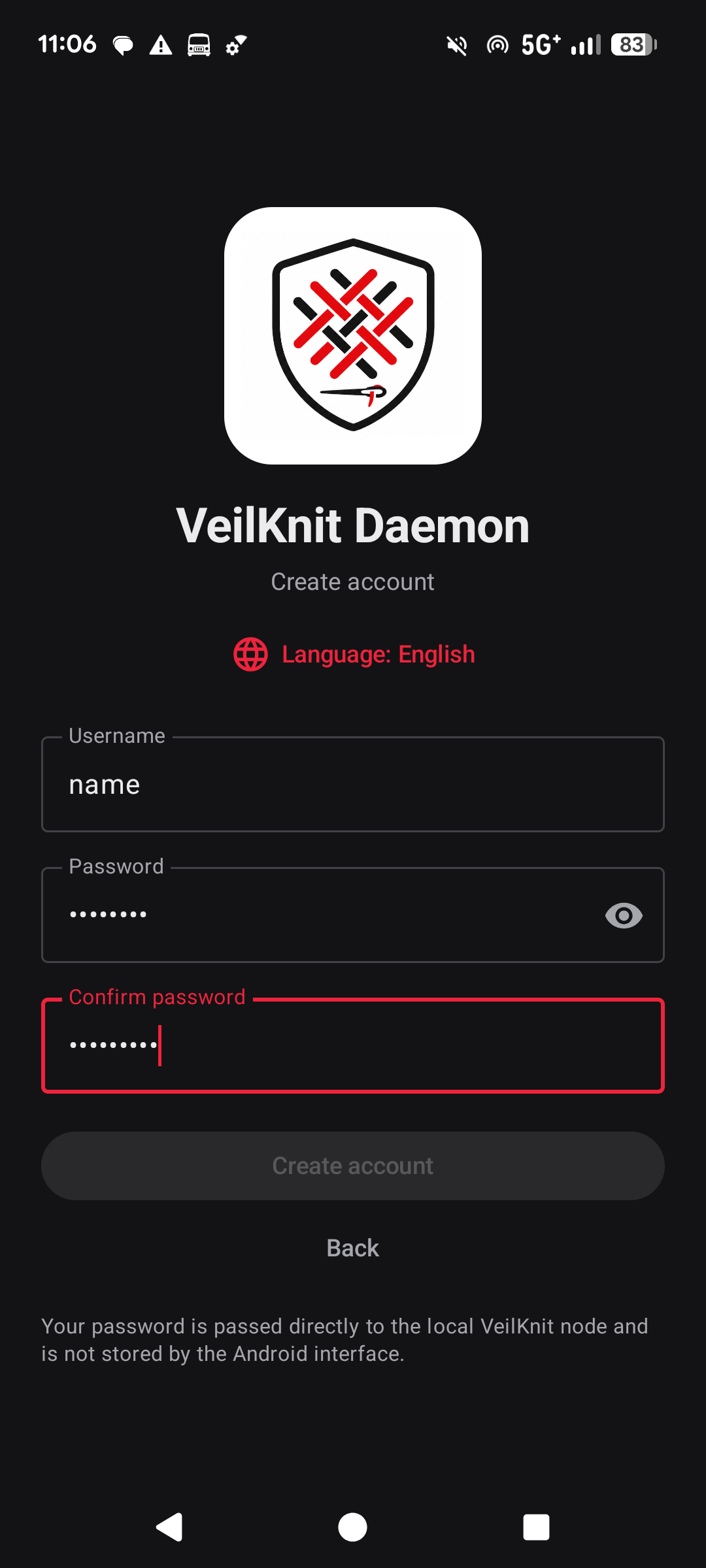
On first use, create an account. This is the identity the Daemon uses for its local account-aware storage and networking session.
Let the Daemon attach to the network
Wait until the status shows that it has attached. The app can stay running in the background while you use Weave or Rooms.
Approve apps when they ask to connect
A VeilKnit app requests authorization from the Daemon. Approve apps you trust, and the app can then use the local Daemon API.
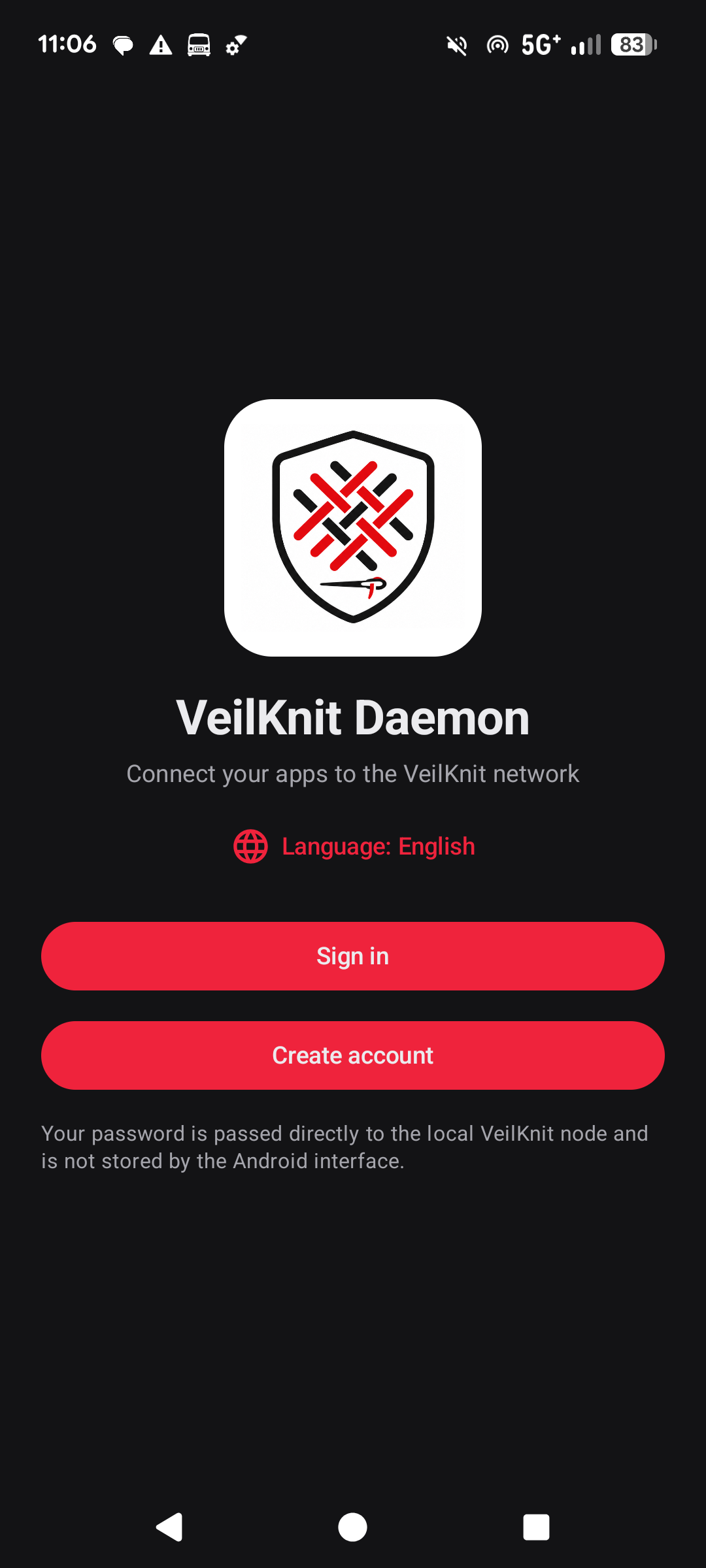
What it looks like
How much detail do you want?
Just give me the beginner overview
Veilid provides the decentralized network. The Daemon is your machine's long-running helper on that network. Apps talk to the Daemon locally instead of each reimplementing the entire network stack.
I'd like more detail, please
The Daemon handles app authorization, DHT operations, routing, presence/check-ins, mailbox-style delivery, reputation signals, gossip hints and lifecycle management. Apps can use those services through a narrower API.
Give me all the details!
The project is split into networking and control modules: handshakes establish peers, DHT records provide durable decentralized state, mailbox/custody paths help with delayed delivery, reputation limits abusive or unreliable peers, gossip accelerates discovery, and walk tasks explore the network. These systems are still evolving during pre-alpha development.
No, I said ALL the details!
For implementation details, current behavior and the latest source, the repository is the authoritative reference.
Open the Daemon repository